Showing posts with label Sony. Show all posts

December 26, 2011

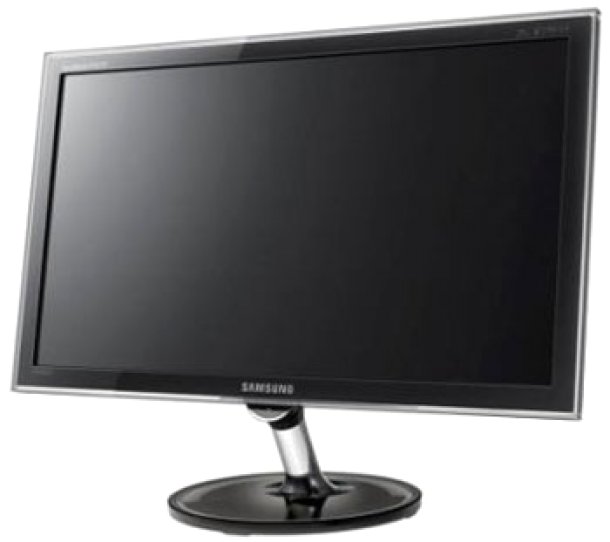
Samsung buys Sony's stake in LCD venture


Sony Corp. sold its stake in the venture with Samsung Electronics Co. to make liquid-crystal displays to the South Korean company after predicting an eighth consecutive year of losses from TVs amid sluggish demand.
Samsung will pay 1.08 trillion won ($935 million) in cash for Sony’s stake in S-LCD Corp., a venture formed in 2004, the Suwon, South Korea-based company said in a statement today. Sony, which invested 1.65 trillion won in the venture, will take a charge of about 66 billion yen ($846 million) in the quarter ending Dec. 31 after the deal, Japan’s biggest consumer- electronics exporter said in its statement.
The stake sale enables Sony Chief Executive Officer Howard Stringer, 69, to shed the responsibility of panel manufacturing amid losses in the TV business, where Samsung is the world’s biggest. To turn around Sony, which has forecast a fourth consecutive annual loss this year, Stringer has announced $8.4 billion of acquisitions in 2011 to bolster the profitable phones and music divisions and introduced tablet computers to challenge Apple Inc.’s iPad.
“It’s a step forward for Sony,” said Shiro Mikoshiba, an analyst at Nomura Holdings Inc. in Tokyo. “Canceling out the venture enables Sony to become more flexible in procuring panels. Still, Sony continues to face falling prices and heavy fixed costs.”
Sony shares gained 1.6 percent to 1,394 yen at the close of trading in Tokyo today, while Samsung fell 0.2 percent to 1.07 million won. The deal was announced after the stock market closed for trading. The Nikkei reported the news earlier today.
Substantial Savings
The maker of Walkman music players and PlayStation consoles has declined 52 percent this year, valuing the company at $18 billion, down from more than $100 billion in September 2000. Samsung has risen 12 percent in Seoul this year and Apple has jumped 25 percent.
Samsung had 50 percent of the venture plus one share, while Sony held the remainder, according to the statement. The two companies have also entered into an agreement for supply and purchase of LCD panels, Samsung said in the statement.
The transaction and the subsequent agreement will enable Sony to secure a flexible and steady supply of LCD panels from Samsung, based on market prices, and without the responsibility and costs of operating a manufacturing facility, Japan’s biggest consumer-electronics exporter said in its statement.
“Despite this one-time loss, Sony estimates that the transaction will result in substantial savings,” starting January, Sony said in the statement.
Downgrading Sony
Earlier this month, Fitch Ratings downgraded Sony’s long- term ratings to “BBB-,” one level above junk, from “BBB,” citing difficulties in reviving the money-losing TV business and deals that won’t improve profit.
Sony, the world’s No. 3 TV maker, is streamlining its main TV operation, which is estimated to lose 175 billion yen in the year to March. Last month, Sony predicted it will post a loss in the year to March 31 after the company slashed its TV sales target and the yen reached a postwar high.
The Japanese company lagged behind Samsung and Seoul-based LG Electronics Inc. in the global TV market last year, with 12 percent of sales, according to DisplaySearch. In the U.S., Samsung and Vizio, founded in 2002, had the biggest share for flat-panel televisions, based on research from IHS iSuppli.
Last March, Sony agreed to sell 90 percent of a TV factory in Nitra, Slovakia, to Hon Hai Precision Industry Co., after disposing of 90 percent of its largest North American TV-making site to Taipei-based Hon Hai. Sony also agreed to sell a TV facility in Barcelona in September.
Unflagging Resolve
Earlier this year, Sony agreed to divest its money-losing smaller-sized LCD business to a government-backed fund, which also bought a similar unit from Toshiba Corp. and Hitachi Ltd. expenses at its marketing units.
“I have unflagging resolve” to turn the TV business around, Executive Deputy President Kazuo Hirai said Nov. 2. Sony’s management “feels a sense of crisis” about the unit’s losses, he said.
TV makers also face what Credit Suisse called a “generational culture shift surrounding video consumption.” Teens live in an Internet-based video culture that doesn’t depend on cable and satellite broadcasts, and they are satisfied with “small-screen experiences” and lower picture quality, the analysts led by New York-based Stefan Anninger

December 12, 2011

Guide to Greener Electronics


International non-governmental organization well known for its works of protection and conservation of the environment - Greenpeace has released its “Guide to Greener Electronics ,” foucusing on e-waste. According to the “Guide to Greener Electronics” of the Amsterdam, Netherlands based Greenpeace, Nokia and Samsung have been ranked at top positions, while Wipro Infotech has been named as top Green Brand of India.


Wipro Infotech has been ranked among the top five green brands in the world. Scoring 5.5 out of 10 to achieve the top rank among Indian IT brands, Wipro also climbed up in the global ranking. In a statement yesterday, Wipro stated that it has been able to achieve its present ranking largely due to its comitted efforts towards “energy efficiency and structured programme for effective e-waste management for customers”.  


According to Wipro, it has been – rolling out energy star compliant products, launching ewaste management programmes, creating awareness among public, and using recycled plastics in its new productions. Wipro stated that it has been creating awareness among its customers on recycling collected e-waste rather than mere disposal. The company claimed that it has restricted the usage of pernicious substances in its products.
Greenpeace’s “Guide to Greener Electronics” has named Sony as ‘greenest’ console brands. According to the GUIDE, Sony consoles are more friendly to environment than that of Microsoft and Nintendo -- Sony products are 40 percent environmentally-friendly than Microsoft’s, while 50 percent greener that Nintendo’s products. Sony has scored 5.5 out of 10, Microsoft has scored just 2.7, while Nintendo has scored worst 0.8 in the rankings.


In its Guide to Greener Electronics, Greenpeace has stated that Nintendo has done good job by banning the use of phthalates, and monitoring its use of antimony and beryllium. Certainly, the company is "endeavouring to eliminate the use of PVC, but it has not set a timeline for its phase out". In its report, Greenpeace wrote, "The company has banned phthalates and is monitoring use of antimony and beryllium and although it is endeavoring to eliminate the use of PVC, it has not set a timeline for its phase out. Nintendo discloses carbon dioxide (CO2) emissions  from its own operations and commits to cutting CO2 emissions and other greenhouse gases by 2% over each previous year. However, Nintendo admits that an increase in business led to a 6% rise in CO2 emissions in 2006."


Greenpeace has praised Apple for reducing the use of PVCs and BFRs in its products, but Philips, according to Greenpeace, has been very impressive in the war against e-waste.

According to Greenpeace, the Guide to Greener Electronics “star” has gone to Philips and the 47,000 people who sent emails to the company. In the report, Greenpeace wrote, “The Dutch electronics giant (Philips) reacted to our e-waste campaign with a dramatic about-turn onrecycling and take-back. They've jumped from 15th to 4th place in one go. Following public pressure, the company has significantly improved its position on taking financial responsibilties for the recycling of its products when they become e-waste.


However, the companies, such as HP, Lenovo and Dell have been penalined in the Guide to Greener Electronics. According to Greenpeace, these companies have failed to keep up ther promises to eliminate vinyl plastic (PVC) and brominated flame retardants (BFRs) from their products by the end of the year. 

Greenpeace commended some of these companies’ products that are free from hazardous chemicals, yet these companies have been ranked worst for their negligence.

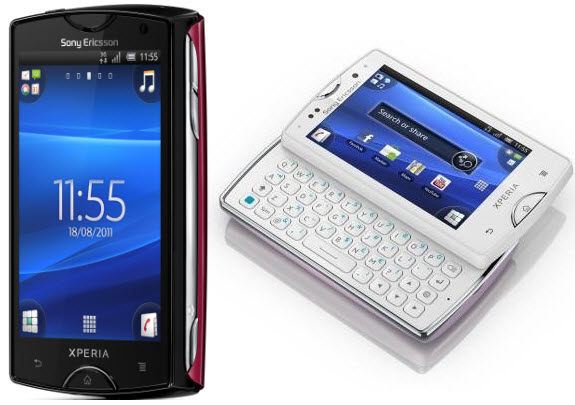
QWERTY + Gingerbread + MiniPro = Xperia Mini Pro

The Sony Ericsson Xperia Mini Pro has still to be launched in many territories across the world, but will apparently be making its debut in the Indian market , priced at Rs.15,399. Running on Android 2.3 Gingerbread and bearing a full-fledged 1GHz processor [ a wondrous inclusion ], the size is so handy and the Xperia Mini Pro also features a full Qwerty slider keypad. 
Specifically, the Xperia Mini Pro has a 1 GHz Scorpion processor with an Adreno 205 GPU, part of the Qualcomm Snapdragon MSM8255 chipset. It comes with 512 MB of RAM. The Xperia Mimi Pro has a 3 inch capacitive touchscreen with a resolution of 320 x 480 pixels and the great thing is that it runs by the Sony Mobile Bravia Engine. Its 5 MP auto focus camera comes with LED flash , is capable of 720p HD video recording and also features smile detection, geo-tagging and image stabilizing features.


OS  Android OS, v1.6 (Donut), upgradable to v2.1
Chipset  Qualcomm MSM7227
CPU  600 MHz ARM 11
GPU  Adreno 200
Sensors  Accelerometer, proximity, compass
Messaging  SMS (threaded view), MMS, Email, Push email, IM
Browser  HTML
Radio  Stereo FM radio with RDS
GPS     Yes, with A-GPS support
Java  Yes, via Java MIDP emulator
Colors  Black, Red, Pink

- MP4/H.263/H.264/WMV player
- MP3/eAAC+/WMA/WAV player
- TrackID music recognition
- Google Search, Maps, Gmail,
   YouTube, Calendar, Google Talk
- Document viewer
- Voice memo
- Predictive text input

Battery 
Standard battery, Li-Po 930 mAh

Stand-by

- Up to 285 h (2G) / Up to 360 h (3G)
Talk time- Up to 4 h (2G) / Up to 3 h 30 min (3G)
SIZE
                             Dimensions
                     
                       
                         90 x 52 x 17 mm
Weight                         120 g

Key features :

  • Quad-band GSM /GPRS/EDGE support
  • 3G (7.2 MBps HSDPA and 5.76 Mbps HSUPA)
  • 3" 16M-color capacitive LED-backlit LCD touchscreen, HVGA res (320 x 480), Sony Mobile BRAVIA engine
  • Full four-row, slide-out QWERTY keyboard
  • Android OS v2.3 Gingerbread
  • 1 GHz Scorpion CPU, Adreno 205 GPU, Qualcomm Snapdragon MSM8255 chipset
  • 512 MB RAM
  • 5 MP autofocus camera, LED flash, geotagging
  • 720p video @ 30fps, continuous autofocus
  • Front facing VGA camera
  • Wi-Fi b/g/n and DLNA
  • GPS with A-GPS
  • microSD slot (32GB supported, 2GB card included)
  • Accelerometer and proximity sensor
  • Standard 3.5 mm audio jack
  • Stereo FM radio with RDS
  • microUSB port (charging) and stereo Bluetooth v2.1
  • Voice dialing
  • Adobe Flash 10.3 support
  • 331 hours of standby time

November 23, 2011

Android Increases the market share

Android is forecast to increase its world wide share of media tablet from 20% in 2011 to 39% in 2015.


On a study conducted by Marketing Company, the numbers confirm that Android continues to increase its share at a staggering rate, while Samsung maintains its position as the US largest cell phone manufacturer.

With the iPhone missing on its usual July refresh cycle, Android didn't even need the Galaxy S II help in the US to gain the huge 5.4 percent points in the past three months alone. The share of the Google OS now sits at 41.8%, which is nearly 15 percent points more than that of the second most popular platform.
That second most popular platform would, of course, be iOS, which claimed a market share of 27.0%. That's a 1 percent point increase over the past three months, despite the fact that no new handset entered the Apple OS ranks - impressive indeed.
The other smartphone platforms on the US market are still unable to match the growth rates of the two behemoths. The once leading BlackBerry OS has lost 4 whole percent points in the past three months alone and now holds just 21.7% of 82.2 million smartphones in the US - putting it at a distant third place.
WP7 is also still unable to make a difference with Microsoft's share slipping a percent point to a market share of 5.7%. Symbian is not doing particularly well either (even by its own low standards in the US) and now powers less than one in twenty-five American smartphones.

DMCA.com The Techbay | All Rights Reserved.

Designed by "mintJelly"